Showing posts with label Robot Challenge. Show all posts

Saturday, July 11, 2020

Minions!

A Dream of Totally-Not-Evil-Robot-Army Minions!!


Minions - and not the D'zney ones!  Every Mad Scientist needs them.  Especially if you are going to build a robot army. Minions can be the foundation for any robot army, the very lowest of the 'foot soldiers'. What would be the robot equivalent?  Perhaps the most simplest robot configuration. In 'Agile' speak: the Minimal Viable Robot?

Robotic Minion with a Manipulator Arm

The Minimal Viable Robot, would have the minimal number of parts, and be the easiest to replicate. It could be small, one would say Miniature. A minimal, miniature robot - the first one in the Robot Army.  It will be a Min-i-on, and mini-one, a Mini1!

Lets build it!!  Because this Robot Army needs many many more robots!  It needs Mini1s!!

Mini1 sketches

Design


What is the bare-bones, minimalist robot, that still has some kick?  I would propose:

  • 2 Wheels
  • 2 Small Motors
  • a Motor Controller
  • Microcontroller
  • and a Battery

That sounds really basic. but, if it is going to do something - like to serve butter - in needs at least a sensor and a manipulator.

Here are some parts I have laying around the Totally Not Evil Robot Army Lab. This is a really cheap build with these parts. The Wheels are from an old printer. The motors came off of a chotsky fan I collected from a trade fair. The motor driver is a little overkill L298N but will do the job. The microcontroller is a Arduino Pro Mini (clone) about $5. and for power perhaps this battery bank battery 5V.  For a sensor, I have a common ultrasonic ranger HC-SR04.  And if I go for an arm, I will use simple micro-servos. In the bottom corner is a ESP32, which would be more powerful, and provide wifi/bluetooth - perhaps for future versions.

Potential Parts for a Mini1 - Robot Minion


Alright!  Let's get started:

Mini1 - first CAD sketch - OpenSCAD

Wednesday, January 8, 2020

Robot Roundup - End of 2019

This is not a end of the decade summary of robotic progress, although, in the last ten years robotics has seen very positive and dramatic growth!  

Perhaps, there is more of a thought of that robots are becoming more mainstream. The thoughts of having self driving cars (which are just big commercial robots) has become more of an inevitability. Just as the chances of seeing robotic characters in a Star Wars (or any space themed) movie.

To me, mainstream will be when you see robots actively working in daily life. Walking around London over the Christmas break, I did not see very many (any) robots, so there is still some time before they are truly mainstream.

In the meanwhile, here are some interesting developments I have personally noted:  (and I am not talking about drones now, they tend not to be autonomous, and in some cases can be somewhat evil.)

Inspection Robots:
Ah, the world of Inspection robotics, probably the most applicable use cases for today's robot technology.

Gecko Robotics - Recently raised $40M USD in series B round of investment.
Gecko Robotics - Pipe Inspection robot
Gecko is now in an expansion phase. They are growing in staff in the 100 person company, with a focus on inspection experts that can interpret the data.  Their business model is to lease out the robots assuming as a service. They currently have 60 robots, and are now looking to expand to 100.

Honeybee Robotics is another robotics company with inspection robots. They have been in business since 1983 and active in Space, Defence, Medical, and Oil/Gas industries. From the website, it seems that they have been very instrumental (pun?) in working with space exploration robotics, specifically the mars rovers. Most recently, the Phoenix drilling robot probe. For inspection robotics, they do not seem to have as much to offer, but you have the love the cute little (tiny) pipe crawling camera platforms.


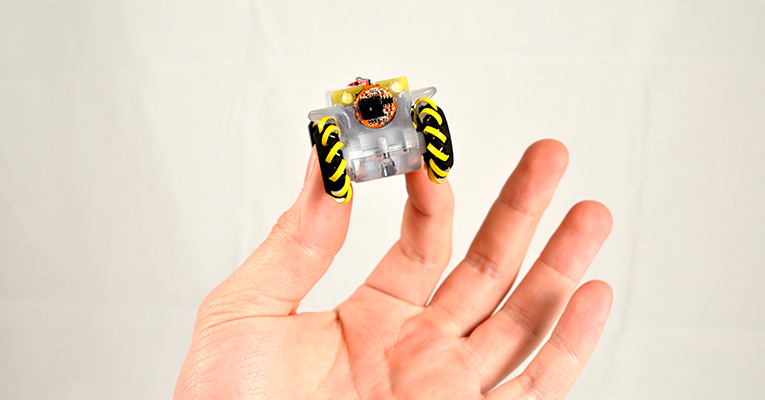
Honeybee robotics magnetic Mecanum wheel technology

Honeybee Robotics camera pipe inspector
The pipe inspection robot is adorable, but I am not sure how well those wheels will be able to pull a cable load. The metal chassis does look very rugged. Inuktun Robotics - now part of Eddify is the maker of the Versitrax track system for inspection robotics. I have written about Inuktun in the past, as they have a very modular systems approach to their robotics.  Their track system is most impressive in shape and duty cycle.  (I am sure it has a nice price tag to go with it ;) the versitrax system was the inspiration for my design of the Wild Weasel.


Versatrax by Inuktun, now part of Eddify

Versitrax modular track by - Inuktun


GE Inspection Robotics - probably the market leader? I don't know for sure. But, I do know that GE is a top player in any industry the participate in. As a leader in power systems, they would have a strong need to provide inspection robotics for pipelines, boilers, crackers, etc.  The Inspection Robotics division is HQ in Zurich. They seemed to have acquired a number of robotics and software companies and are working to incorporate their technologies together. This is very typical of a large industrial player that can grow by acquiring innovative tech capabilities. (I am not knocking on the engineers that made these fine technologies!)
The Bike platform is one of their compact inspectors with strong magnetic wheels and mobilies technologies. It can drive/cross over a 90 degree corner!


GE Inspection Robotics - Bike Platform

Robot business opportunity, eh?  On a little more along the lines of small business, there are many small companies that will custom build inspection (and tactical) robots for you.  Here is one I recently found, that is located in the US state of North Carolina.
SuperDroid Robots  They specialize in their own custom built robots. Prices range from a few thousand USD to tens of thousands USD.  Check out their site, they have a lot of unique builds and many custom "fun" robots.


SuperDroid "RealCow Robotic System" - probably their most absurd robot (cowbot?)
I highly recommend checking out the site, everytime I go their, I find new robots that they have built. They are quickly becoming a favorite site, even as they have a tendency toward 'tactical'  ;)

speaking of tactical robots for warfighters...

DARPA's grand subterranean challenge - DARPAs grand challenge seems to be moving long.  They have recently completed stage 2 of the challenge.


DARPAs SubT Tunnel Challenge

Here is a great article by Popular Mechanics about the results of the DARPA Subterranean Challenge and the man-made Tunnel Circuit.  I think the impact of this will either be on the receiving end of lidar options, or it could spurn additional research in the Lidar/SLAM aspects of robotic development.  If you read the article, keep an eye out for the "robot with robots", this is one of my favorite themes for future robot explorations!

On the Software side of Robots
There have been a lot of improvements to software systems that will operate and control the robots of the future.  Many of these are open projects, that provide tools for 'the rest of us' to use in our hobbies and businesses.  Some of the most basic, are tools like the Robot Operating System (ROS) and simulators such as Gazebo. I would like to focus a little more on one aspect that will be required for Autonomous robots - Computer visions.  Specifially Computer vision that will be used for simultaneous localization and mapping (SLAM)

OpenCV is leading the way for computer vision with many libraries and easy to use.
openMVG uses multiple images and views to perform photogramy, or constructing the 3D space from graphical images.

With the strong focus by the industry on self driving cars there will be significant enhancements in lidar technology. This should lead to reduced cost for the sensors, and perhaps the processing being moved to a chip to provide direct sensor measurements to the robots SLAM routines.

Ambarella - Computer Vision on a chip, has a new robotics platform and partnership with Amazon. they started their business with video processing chips, but pivoted to providing CV on a chip. This is similar to the open source project of OpenCV (?).  At any rate, this is the types of innovations that will be coming in the next years. Many of the open AI type processing necessary for robotics will be moving to fast implementations on a chip.  (you can also think of this similar to GPUs being broken out from code to a chip).
they will need to work on their messaging a bit, their website states:  
Our intelligent video devices use face detection, analytics, and multi-object CNN classification to enhance security in businesses and homes, without the need for the cloud.
This might be contrary to the interest of their new partner, Amazon.  And a final note about Ambarella, as concerns over our society becoming more and more a surveillance state, this example from their advertising could be interpreted in poor taste:
Is surveillance becoming the new norm?


So, What (else) to Watch in 2020?

Will Amazon have any success in aligning their robotic offerings with these many disparate companies which do their own processing. 

As Boston Dynamics goes comercial, will there be a 'trough of disillusionment' (from the Gartner Hype Cycle) as it applies to robotic dog platforms?  It is a remote observation platform, that can walk in all weather and surfaces. but with remote observation and (limited?) manipulation. Or will we find new use cases that make it a viable, value added, platform.
Boston Dynamics - An Android and his Dog

As an obvious result of the Spot Mini, we have seen many new quadruped robots. All of these knock-offs (and I mean that in a good way) seem to have exact same capabilities and servo placements etc. It is my hope that we quickly move on from this and start to see some truly innovative approaches to robotics, after all they do not have to look like dogs or humans. They just need to be able to perform. This is evident in BDs third robot, Handle, that looks nothing like a human or dog. This robot is built entirely for function, it seems without any thought of form. If anything it looks like a very awkward bird, ok now I am doing the anima-morphing.

Boston Dynamics - Handle

Future?
So, What Would Elon Musk Do? (#WWEMD?)  How would you build your robot business?

Actually, I would not be surprised to hear that SpaceX is thinking about roving robotics. After all, the Falcon 9 is a robot ship (?).  But most of all Space exploration is going to require A LOT of new autonomous robots.

Saturday, October 13, 2018

New Agility and Application

The Robots are getting better!  They are getting faster and more agile, this will lead to new applications and use cases.  On the 'agile' front new videos are out from Boston Dynamics showing their current Atlas robot doing Parkour!


The dynamics of self-stabilization and location awareness are magnitudes better than just a few years ago when we saw videos of robots stumbling in the woods, gravel, and uneven surfaces.  The magic here is in the controllers that are able to identify the right amounts of force to to apply to surfaces, the right of amount of energy in the actuators, and the enhanced SLAM (Simultaneous localization and mapping)

Can it get more bizarre?  Yes it can!

Meet Salto a small jumping robot from UC Berkeley's Biomimetic Millisystems Lab. Salto is a mono-ped, just one leg. It has inertial stabilization with a swing arm as well as small "quadcopter" motor/blades for pitch and yaw control. Last year we were amazed to see Salto jumping and exploring.  This year, they have had dramatic improvements to the controller enabling more precise hopping to obtain an objective like climbing on a table.


The exploring robots are coming.  They are sprinting, hopping, and learning.

Another good example of the enhancements in SLAM (remember: Simultaneous localization and mapping?) is the MicroMouse challenge.  In this challenge small robotic "mice" are programmed to autonomously search a maze to find the "cheese".  After the exploration phase, the mouse returns to home and runs the maze for speed.  Here is an example of the ability to localize, map, and solve - then make a speed run!


These advancements are increabley in couraging. Access to open technologies, microcontrollers, low cost sensors and actuators, etc, are creating a new revolution in robotics. This will create more abilities, new use cases, and new applications. Remote Exploration is a great new use case.  We have been sending probes and robots into space for some time, with new interest and ability in robotics we will be able to explore much further and in much more detail.  A great example of this is the recent MASCOT and  Hayabusa2 exploration of the Ryugu asteroid. This is fantastic robotic exploration work by JAXA and DLR the Japanese and German space agencies.

There is a whole new domain emerging for robots  ... and the Totally Not Evil Robot Army, is getting ready for it!

Mojo2 - 12 Oct 2018 - A Compliant Quadruped Walking Robot Dog


Wednesday, September 5, 2018

Sailing Robots of the World

Congratulations to the "SB Met" Autonomous boat for the successful crossing of the Atlantic Ocean.  This is the first "unmanned" sailing robot to win the MicroTransat by crossing the Atlantic Ocean.


SB Met - Ocean Sensing AS Robotic Boat

Here is a nice article about the successful completion written by the San Francisco Chronicle:  Robot boat sails into history by finishing Atlantic crossing

The concept of autonomous boats sailing the Earths Oceans has been developing rapidly over the last few years.  A convergence of robotic technology, remote communications, and better batteries/solar have created an opportunity for new robots that can sail autonomously. These vessels are much more capable than drift buoys, having either sails, motors, or 'wave gliders' to provide propulsion. Adding the in the lowering cost of satellite communications, it is possible to create lower cost sensor platforms that can travel long distances on open water.

There are a few Robotics Challenges that have been created to spur innovation and attempts to make record setting crossings.  The Micro Transat has been running races for teams to compete annually by either Autonomous or "Unmanned" robots crossing the atlantic.  Only this past year have serious competitors been able to complete the journey. "Serious" meaning craft that are built to withstand the beating ocean waves, minimal sunlight, strong currents, and harsh salt water. This year Ocean Sensing AS entered it's "Sailbuoy", a sensor platform built to autonomously withstand the North sea and collect data for days before returning to port.

Robot Challenges:
MicroTransat - https://www.microtransat.org/
World Robotic Sailing Championships - http://www.roboticsailing.org/
The Sailbot competition - http://www.sailbot.org/

There are a few various projects and companies that have been started in the last few years.  Most interesting are the Individuals and groups of Makers that are building Autonomous robot boats.
SeaCharger by Damon McMillian

Damon McMillan had great success when his "SeaCharger" navigated from California to Hawaii, and then from Hawaii to (nearly) New Zealand.

Project Ladon
Project Ladon is also building an Autonomous Boat with intentions of being the first to sail Around the World

The ambitious BlueBird Project is building the SeaVax robot to scoop-up ocean polluting plastics.

There are a few companies that have been created to build Autonomous boats
Sail Drone, Alameda, California:  https://www.saildrone.com/
Ocean Sensing, Bergen, Norway:  http://www.sailbuoy.no/
Liquid Robotics: https://www.liquid-robotics.com/  - makers of the Wave Glider
Teledyne Marine: http://www.teledynemarine.com/slocum-glider - makers of Slocum Gliders

More local applications for environmental monitoring include project and companies like:
Robot-fish made for Project Shoal
Vertex AUV by Hydromea, an Autonomous Underwater Vehicle

There are many more, if you have a favorite system that I did not mention, please post it in the comments section.

It is a wonderful time we live in! It is time to create robots to explore our world and beyond!


Friday, August 17, 2018

DARPA - Subterranean Challenge

Earlier this year DARPA (Defence Advanced Research Projects Agency) announced the next Robotics Challenge. This challenge will be underground! They are looking for robots to be capable of exploring and mapping underground structures.  The challenge will have three subdomains: Man made tunnel systems, Urban Underground, and Natural Cave Networks.


The previous Robot Challenges included the original grand challenge of self navigating robots and more recently general robots for human activities.  NASA also recently completed a Robotics Challenge, and will have a new one starting later this year.  NASA Space Robotics Challenge 2

Both DARPA and NASA will have a track that allows for Virtual competition.  The simulation platform of choice is Gazebo part of the Open Source Robotics Foundation managers of the Robot Operating System ROS.

It is natural to think of the use cases and value an underground mapping robot capability could provide.  The recent search and rescue of the 12 boys in Thailand come to mind. Also, many science fiction movies show the future tech of a cave mapping robot, such as seen in the movie Prometheus.

It will be interesting to see the innovation that is spurred from these competitions.  Perhaps they will could find value in a Totally Not Evil Robot Army!